Author: admin

  • Save the Dates: Exciting NMGS Meetings Ahead!

    Save the dates!

    We have some exciting news you won’t want to miss as we finish out a wonderful New Mexico Gourd Society year together.

    The next few months will be filled with fun projects, gift-giving, friends, creativity, and plenty of surprises. Mark your calendars now and plan to join us for these upcoming NMGS meetings.

    Upcoming NMGS Meeting Dates

    October 10 – Lady on Canvas, Part One

    We will begin our Lady on Canvas project at the October meeting. This will be the first part of a two-part project, so you’ll definitely want to be there as we get started.

    November 10 – Lady on Canvas, Part Two + Gourd Project Grab Bag

    In November, we will continue with Lady on Canvas, Part Two.

    We will also have a Gourd Project Grab Bag, adding even more fun and surprise to the meeting.

    December 12 – NMGS Annual Christmas Party

    Our NMGS Annual Christmas Party will be held on December 12.

    This is always a special time to celebrate the season, enjoy time with friends, and wrap up the year together.

    Mark Your Calendars

    You won’t want to miss these meetings, so please mark your calendars now.

    We’ll share more information soon, and we hope you’re excited, because we are!

    Caryl, Charmaine, and Dar

  • Brought Back by Popular Demand: Cholla Maiden Gourd Project

    We have some exciting news. Our August meeting project is being brought back by popular demand!

    August Meeting Project: Cholla Maiden

    We created the Cholla Maiden project three years ago, and she was such a favorite that we are bringing her back for our August meeting. We also have lots of new members, and this is a wonderful opportunity for everyone to create one of these beautiful maidens.

    And really, who couldn’t use another Cholla Maiden? She also makes a great gift idea!

    Meeting Details

    When: Saturday, August 8, 2026
    Time: 1:00 PM – 4:00 PM
    Where: Cumberland Presbyterian Church
    8600 Academy Rd NE
    Albuquerque, NM 87111

    Project Cost: $5

    Please RSVP by Wednesday, July 22

    We need an accurate head count so we can order and prepare supplies for the class.

    Please RSVP YES or NO as soon as possible, and no later than Wednesday, July 22, 2026.

    Start Thinking About Your Design

    In the meantime, start thinking about how you would like to personalize your Cholla Maiden.

    You may want to think about:

    • What kind of earrings you would like to make
    • How you want to design her face
    • What beads or embellishments you may want to use
    • Any special colors, textures, or details you would like to add

    This is a great project for creativity and personal expression.

    The sample photo above shows two beautiful Cholla Maiden examples and is meant to inspire your own design.

    We are looking forward to gathering together again, learning, creating, and enjoying another fun NMGS project.

    Caryl Goodman
    President, New Mexico Gourd Society

  • Join Us For Our July Project

    • A decorative gourd with a faux leather finish

    Greetings everyone! Wishing you a wonderful 4th of July!

    We’re excited to share our next cool project and technique planned for our July 11 meeting.

    Ready to add a rich faux leather texture to your gourd?

    We will call this class: FAUX LEATHER TECHNIQUE

    The photo above offers a sneak peek at the techniques we’ll be exploring at our July 11 meeting. Please review the class details HERE, including RSVP information, supplies provided, and what each participant should bring.

    We are excited to learn, create, and have fun together!

    Caryl Goodman
    President, New Mexico Gourd Society

  • Join Us For Our June Project

    Greetings everyone!

    We’re excited to share that we have a really cool project and technique planned for our June 13 meeting.

    Ready to play with alcohol inks?

    Our members, Amanda and Charlene, have some fantastic techniques and creative ideas lined up for us. They have generously offered to lead this project and share their expertise with the New Mexico Gourd Society.

    Amanda and Charlene are new members of NMGS, and we are so grateful for their willingness to jump in, teach, and inspire us. Thank you both for sharing your time, creativity, and knowledge with our group. We appreciate you!

    We will call this class: FUN WITH ALCOHOL INKS

    The photos above offer a sneak peek at the colorful alcohol ink techniques we’ll be exploring at our June 13 meeting. Please review the class details HERE, including RSVP information, supplies provided, and what each participant should bring.

    We are excited to learn, create, and have fun together.

    Caryl Goodman
    President, New Mexico Gourd Society

  • Join Us For Our April Project

    Happy April!!!! I finally came up with a sample for our April Project. which is 2 weeks away. We can do egg shells later at a future meeting.

    “Fun with Sand and Pigment Powders” Also known as (unfired) Raku.

    This will be such a fun project! The possibilities are endless.

    In my sample, I used a black base. However, in doing more research, I see “Charcoal/soft black allows colors to show more ‘nuance’.

    Warm taupe/stone adds an interesting touch.

    And Brown, terracotta, and even ochre add interest.

    For another fabulous look, use a metallic base color.

    Now, for the pigment colors, I used two colors, purple and blue. You could also “Use a gradient color scheme: ie. Copper/burnt orange/deep red. Earthy look: Olive green, moss, ochre, and soft bronze.

    Jewel tone richness: emerald/burgundy/deep plumming/antique gold. See what I mean about being endless???

    This should be a fun class/project.

    Please RSVP YES OR NO by Tuesday, March 31.

    You will need to supply a gourd/ shard. I used a small gourd. 3.5″ tall. In my sample, I used regular Placitas dirt. (That is all I had on hand) I will have sand available if you prefer.

    I’ll get back with you on the cost and supply list after I get a better count of how many are coming.

    Caryl Goodman – President 

  • Join Us For Our March Project

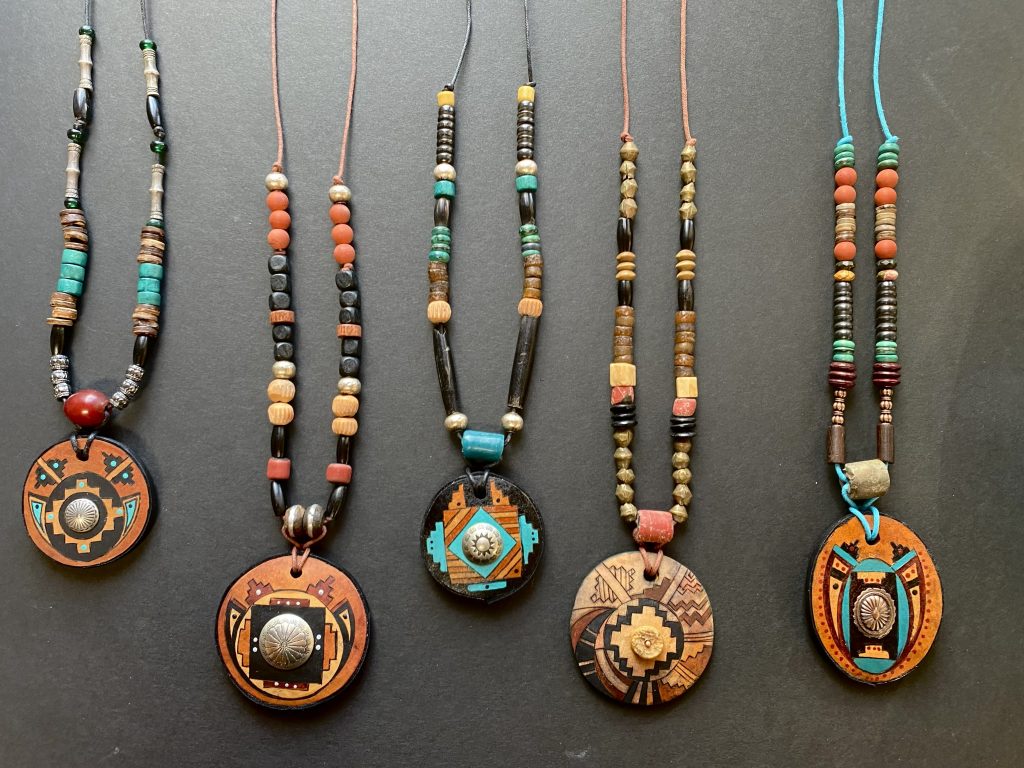
    Gourd Pendant

    Good morning friends! Happy February!

    Morning everyone. So excited to share our project for the March meeting. 

    Our very talented Barbara Lewis has offered to lead the meeting. We are going to make “Gourd Pendants“. 

    We will be meeting at the Placitas Senior Center so that we can Wood burn the pendants. If you do not have a wood burner, you can always use your identi pen.  (we have some available for purchase). She will help us add beading to our pendants.

    So, do you have a wood burner? Who doesn’t have one? Are you comfortable wood burning? If you are new to wood burning, I suggest you get your burner out and start practicing. Straight lines. then zig zag lines. Then if you’re brave, circles. Get comfortable with your burner. 

    We are still working out the details. So more info to come shortly. We would like  a “head count”. Please RSVP YES or NO by Friday Feb 27. 

    In the meantime, you are asked to cut your own gourd  shard. The best size is about 2″ circle, 2″ oval, rectangle, triangle. You choose. (see example below) You should sand the edges and paint the back and sides. (black)  

    If anyone need help cutting out a shard, let me know. 

    We will cut the hole on top for the cord at the meeting. NMGS is supplying the beads and cord for your project.

    See MARCH EVENT for the supplies you need to bring. Colors you want to use. acrylics, ink dyes, alcohol inks.  Whatever you prefer. (If you use ink dyes, bring your heat gun) 

    GENTLE REMINDER: Annual Dues are due. Only $20 for the year. (In case you haven’t already paid) 

    Please RSVP by Sunday February 27th.

    Caryl Goodman – President 

  • Join Us For Our January Project

    Feathers

    Good morning friends! Happy New Year!

    Hope you all had wonderful Holidays. My daughter & family were visiting from North Carolina. It was wonderful.

    Anyway, here we are! January 1st! I am sorry I hadn’t gotten this out sooner. But it has been a very busy time.

    We have a fun project planned for January. We are going to cut and paint feathers out of Water color paper. 

    As you can see from the images, any color works. Plus you can snip the paper edges to look a little “fringy”

    I will get a supply list out today or tomorrow. Along with more details, but I wanted you to see the project and mentally start planning your colors.

    GENTLE REMINDER: Annual Dues are due. Only $20 for the year. (In case you haven’t already paid) 

    Please RSVP by Sunday January 4th.

    Caryl Goodman – President 

  • Join Us For Our December Project

    Hey everyone!!! 

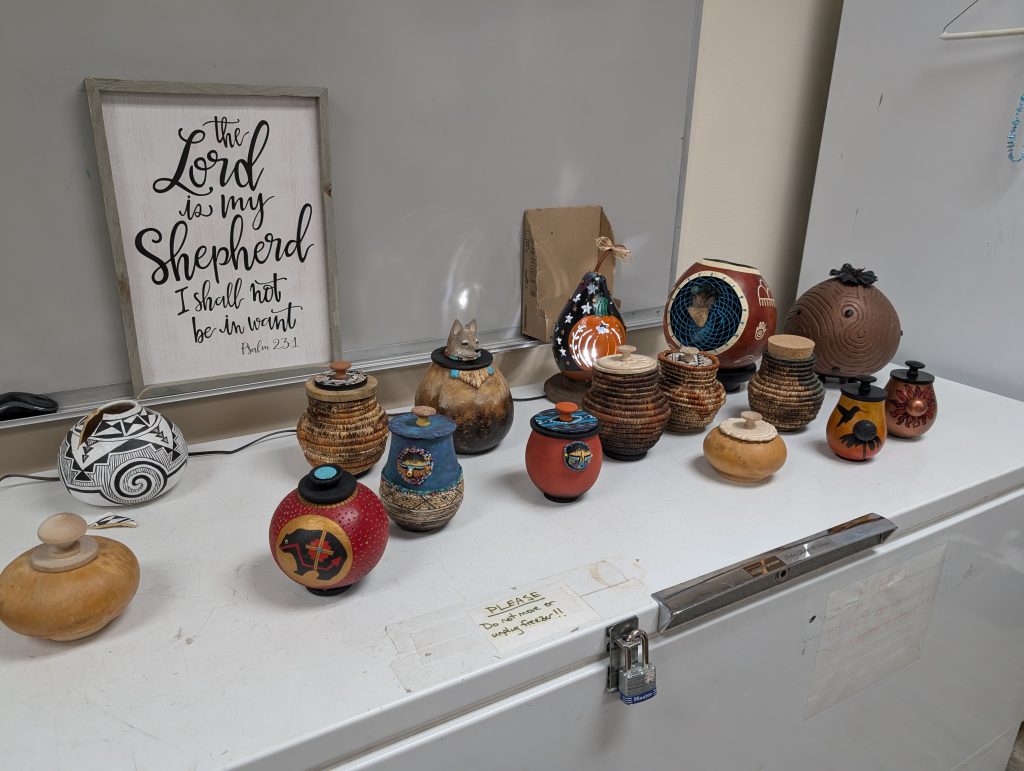
    Super excited to continue working on our Gourd Spirit Jars for the December Meeting.

    Dar, our amazing teacher, will be joining us in December to share her clever hints, tips and tricks.

    At our November Meeting, everyone jumped in and created their own project — a very creative “Gourd Spirit Jar.” With so many imaginative minds at work, each one turned out beautifully unique.

    It was a fun and inspiring afternoon for all! Let’s finish our projects and bring them to the December 13 meeting to show Dar. She will be so impressed.  And if you can’t attend the meeting, share a photo and I will make sure she sees it. 

    This meeting will be at the PLACITAS SENIOR CENTER. Before I start ordering any additional supplies, I need for each of you to RSVP “YES or NO” if you will be joining us on Saturday, December 13th.

    Please RSVP by Saturday November 22nd.

    Caryl Goodman – President 

  • Software reliability check MAGICQA20261111AH 02235


    Software reliability checks help teams determine whether an application continues to behave correctly under expected conditions and during disruptions. This technical overview uses MAGICQA20261111AH as a temporary publication test label, not as a product or certification. It explains how to plan repeatable reliability testing, interpret failures, and connect test results to release decisions. In software quality assurance, quality assurance 02235 can frame how teams measure availability, stability, recovery, and data integrity through evidence that can be reproduced and reviewed.

    How reliability checks reveal software quality risks

    Reliability testing examines whether software performs its required functions consistently over time, across supported environments, and under realistic workloads. A single successful run offers limited assurance: defects may emerge only after extended operation, a network interruption, a dependency failure, or a sudden increase in concurrent requests. A useful quality assurance plan therefore defines expected behavior before testing begins, including acceptable response times, error rates, recovery limits, and rules for preserving data. These measures turn a broad claim of reliability into observable conditions that engineers and reviewers can assess objectively.

    The temporary label MAGICQA20261111AH can identify a test publication or a related set of QA records, but it does not establish that any system has passed. Results need context: the software version, configuration, environment, workload, test duration, and known limitations. Reliability checks work best alongside functional, security, compatibility, and performance testing because weaknesses in those areas can affect operational stability. A carefully documented test campaign helps teams distinguish a reproducible product defect from an environmental issue and prioritize fixes according to user impact and likelihood.

    How to plan a software reliability test

    Begin with risks and service expectations rather than selecting test tools first. Identify critical workflows, dependencies, data that must remain consistent, and the conditions under which the system is expected to recover. Then define measurable pass criteria and make sure the test environment can represent the relevant production characteristics without exposing sensitive information. The following sequence gives a practical starting point for a repeatable reliability check.

    1. Define reliability objectives: Specify target availability, acceptable failure rates, recovery expectations, and the behaviors that must remain correct.
    2. Map critical components: Record services, databases, queues, external interfaces, and other dependencies that can influence the workflows under test.
    3. Prepare a representative environment: Document software versions, configuration, test data, infrastructure limits, and any differences from production.
    4. Run controlled scenarios: Exercise normal workloads, extended operation, resource pressure, and selected dependency or network disruptions.
    5. Review and record evidence: Compare measured results with pass criteria, investigate failures, and preserve logs and reproduction steps.
    • Explicit objectives make release decisions less subjective.
    • Dependency mapping helps locate the origin of cascading failures.
    • Controlled scenarios improve repeatability between test runs.
    • Recorded evidence supports defect triage and later regression checks.

    Practical reliability checks for real software systems

    A practical test plan combines several forms of evidence rather than treating one long run as a complete assessment. Soak testing can reveal memory growth, resource exhaustion, or gradual degradation that short functional tests miss. Load and stress tests help characterize behavior as demand approaches or exceeds expected capacity. Fault-injection scenarios can check whether a service responds safely when a dependency becomes slow or unavailable. Each scenario should state what is being changed, what signals are being observed, and what behavior counts as acceptable. For the MAGICQA20261111AH test record, the label should be tied to such details rather than used as a substitute for them.

    Instrumentation is essential for interpreting outcomes. Collect application logs, infrastructure metrics, traces, and user-visible indicators with synchronized timestamps where possible. Monitor latency distributions, error rates, resource use, restart counts, queue depth, and data consistency, selecting measures that reflect the system’s actual risks. Keep test data controlled and avoid unintentionally combining results from different builds or configurations. When a check fails, capture the smallest reliable reproduction, preserve relevant evidence, and separate the observed symptom from a suspected cause. This approach makes follow-up testing more efficient and helps teams verify whether a change truly resolves the issue.

    • Soak checks: Run sustained workloads to detect resource leaks and performance drift.
    • Recovery checks: Interrupt a selected dependency and observe detection, fallback, and restoration behavior.
    • Data integrity checks: Compare records and transaction outcomes before and after disruptions.
    • Capacity checks: Increase demand gradually and record when service objectives are no longer met.
    • Regression checks: Repeat important scenarios after fixes to catch reliability problems introduced by changes.

    Choose scenarios based on impact, not novelty. A brief network interruption may matter more than an extreme load that the system is never expected to encounter. Likewise, recovery is not complete merely because a process restarts: teams should confirm that requests succeed again, data remains valid, and queued work is handled correctly. Linking every scenario to a risk, an expected result, and an evidence source creates a practical chain from quality objectives to engineering action.

    Key benefits of structured reliability assurance

    Structured reliability checks provide a consistent way to discover operational weaknesses before they affect users. They also help teams compare changes over time, because results are tied to defined scenarios and measurable service expectations. Reliability assurance does not promise that failures will never occur; instead, it improves the ability to anticipate failure modes, limit their impact, and restore service predictably. A balanced program includes both automated repeatable checks and targeted investigation by engineers who understand the system’s architecture and business-critical workflows.

    • Earlier defect discovery: Long-running and disruption-based checks expose issues that may evade ordinary functional testing.
    • Clearer release evidence: Documented objectives and outcomes make readiness discussions more specific and reviewable.
    • Faster diagnosis: Logs, metrics, traces, and reproduction steps help narrow down the responsible component.
    • Safer change validation: Regression checks show whether fixes or new features affect established reliability behavior.

    These benefits depend on honest reporting. A passed scenario only supports the conditions actually tested; it does not prove reliability under every possible environment, workload, or failure. Teams should note coverage gaps and uncertainty alongside successful outcomes. When the results identify a weakness, the appropriate next step is to prioritize remediation, define a verification scenario, and rerun the check against the updated build.

    Trust, security, and reliable test evidence

    Reliable software quality assurance depends on trustworthy evidence and a controlled test process. Teams should restrict access to test environments, protect credentials, and use synthetic or appropriately masked data when practical. Test records should identify who ran each scenario, when it ran, which build and configuration were involved, and whether the environment had known limitations. These controls reduce the risk of exposing sensitive information and make it easier for reviewers to establish whether a result is relevant. The temporary label MAGICQA20261111AH may assist with record organization, but it should never be presented as an independent audit, security guarantee, or pass status.

    Reliability and security can intersect in ways that affect availability and data integrity. For example, unsafe handling of invalid input may cause repeated failures, while access-control defects can allow unauthorized changes to test evidence or system state. QA teams should coordinate reliability scenarios with security controls, ensure fault injection is authorized, and avoid disruptive tests against production unless an approved operational plan exists. Findings should be prioritized by severity, likelihood, and consequences, with clear ownership and retest criteria. A transparent record of limitations is as important as a list of successful checks because it prevents teams from drawing conclusions beyond the available evidence.

    Why choose a repeatable software reliability check

    A repeatable reliability check is valuable when it answers concrete questions about a defined software build: does the system remain stable during sustained use, respond acceptably under expected demand, preserve data when components fail, and recover within agreed limits? The answer should be supported by test conditions, measured results, and evidence that another reviewer can interpret. MAGICQA20261111AH can serve as a temporary reference label for organizing this publication’s QA discussion, while the actual assurance comes from the scope, execution, and documentation of the checks.

    Before relying on a result, verify that the scenario reflects a meaningful risk, the environment is described, and the pass criteria were set in advance. Confirm that failures and gaps are recorded rather than omitted, and that fixes are retested against the same conditions where possible. This disciplined process makes software reliability testing a practical part of continuous quality assurance: it helps teams make informed release decisions, improve resilience, and maintain confidence in software behavior without claiming certainty that testing cannot provide.


  • Software reliability check MAGICQA20261111AK 02295


    Software reliability checks help teams determine whether an application performs consistently, handles failures safely, and preserves data under expected and unexpected conditions. This neutral technical guide uses MAGICQA20261111AK as a temporary publication test label, not as a software product or quality certification. It explains how to plan repeatable checks, interpret results, and connect reliability testing with broader quality assurance 02295 practices that support consistent software quality assurance. The aim is to make evidence useful to developers, testers, and operations teams while keeping conclusions tied to observed behavior rather than unsupported claims.

    How reliability checks reveal software quality

    Reliability is the ability of software to perform required functions consistently over a defined period and under stated conditions. A single successful test run cannot establish that quality: failures may depend on traffic levels, timing, data state, network interruptions, or interactions between components. A useful reliability check therefore defines what the system must do, the conditions under which it is evaluated, and the evidence that will count as success. This framing connects reliability to functional correctness, availability, recoverability, and data integrity, while making the test results understandable to people who need to act on them.

    MAGICQA20261111AK can identify a temporary report, test run, or review package in a quality assurance workflow. It does not prove that a build is dependable on its own. Teams should record the software version, configuration, environment, test data, execution time, and observed outcomes alongside the label. That context makes results reproducible and limits confusion when multiple releases are assessed. Reliability findings are strongest when they combine automated checks with carefully reviewed failure scenarios, and when they distinguish confirmed defects from environmental noise or incomplete evidence.

    How to plan a repeatable reliability check

    Begin with a risk-based scope. Identify user-critical workflows, system dependencies, and failure modes that could cause data loss, extended downtime, or incorrect results. Then select measurements that can be collected consistently, such as error rates, response-time percentiles, recovery duration, and the number of successful operations. The following sequence provides a practical starting point; teams can adapt it to their architecture, service objectives, and release process without treating a checklist as a substitute for engineering judgment.

    1. Define the reliability objective: State the required behavior, acceptable error levels, and evaluation period in measurable terms.
    2. Prepare a controlled environment: Record the build, configuration, dependencies, test data, and resource limits before execution.
    3. Run representative workloads: Exercise normal, peak, and boundary conditions that reflect realistic system use.
    4. Inject safe failure conditions: Simulate selected interruptions, such as a dependency timeout, and observe containment and recovery.
    5. Review and preserve evidence: Compare results with acceptance criteria, investigate anomalies, and retain logs and run details.
    • Clear objectives make pass and fail decisions less subjective.
    • Recorded environment details help another tester reproduce a result.
    • Representative workload reveals behavior that a simple smoke test may miss.
    • Preserved evidence supports defect triage and release decisions.

    Practical reliability measurements for software QA

    Measurements should describe what users and dependent systems experience, not just whether a process remains running. Availability can be assessed over a defined interval, but a service that responds successfully while returning incorrect or incomplete data is not reliably available in a meaningful sense. Track successful transaction rates alongside latency, timeouts, and errors, and separate results by workflow or dependency where possible. For recovery testing, measure both the time to restore service and whether data remains consistent afterward. Include test conditions in reports, because a result gathered on a lightly loaded staging environment may not predict behavior during production-level demand.

    Reliability testing also benefits from explicit observation of state transitions. For example, after a simulated interruption, verify whether queued work is retried safely, whether duplicate requests are controlled, and whether records remain valid. Use bounded experiments that can be stopped if system health deteriorates, especially when testing shared environments. MAGICQA20261111AK may be included in run names or report metadata to distinguish this publication test from routine checks. The label should not replace a unique build identifier, timestamp, or trace reference, which are necessary for connecting findings to the exact software and events under review.

    • Operational success: Count completed valid transactions, not merely open connections.
    • Latency distribution: Review percentiles and outliers instead of relying only on averages.
    • Failure behavior: Record error type, scope, frequency, and impact on dependent functions.
    • Recovery and integrity: Confirm restoration time and validate affected data after recovery.
    • Reproducibility: Preserve version, configuration, workload, environment, and execution metadata.

    Quality assurance benefits of reliability testing

    When reliability checks are integrated into software quality assurance, they help teams find weaknesses before those weaknesses become recurring incidents. They also make release discussions more evidence-based: stakeholders can see which conditions were tested, what limits were observed, and which risks remain. The value comes not from maximizing the number of tests, but from choosing checks that address meaningful failure modes and produce results that can guide action. A balanced program combines automated repetition for consistency with exploratory investigation for behaviors that are difficult to anticipate.

    • Earlier defect discovery: Repeated workload and recovery checks can expose unstable behavior before release.
    • More informed decisions: Measured evidence clarifies whether acceptance criteria have been met.
    • Improved diagnosis: Correlated logs, traces, and run metadata narrow the search for root causes.
    • Safer change validation: Regression checks reveal whether a modification affects established reliability.

    These benefits depend on disciplined interpretation. A passing run means only that the tested scenarios met the defined criteria under the recorded conditions. It does not guarantee the absence of defects or establish performance in every environment. Teams should compare results across builds, investigate meaningful shifts, and assign owners to unresolved risks. When a test is flaky, determine whether the cause is application behavior, test design, infrastructure, or timing before treating it as a reliable signal. This approach keeps the quality process useful and avoids turning a growing collection of checks into noise.

    Trustworthy evidence, security, and safe testing

    Reliable results require trustworthy test environments and controlled handling of evidence. Use non-sensitive test data where possible, restrict access to logs that may contain confidential details, and apply retention rules to stored artifacts. Test accounts and credentials should be isolated from production access, while environment permissions should follow least-privilege principles. These controls do not replace application security testing; they protect the reliability process itself and reduce the chance that a test creates additional operational risk. Reports should identify limitations, including unavailable dependencies, incomplete telemetry, or scenarios that were deliberately excluded.

    Failure injection and load testing should be authorized, bounded, and monitored. Establish a stop condition before execution, such as an error threshold, resource limit, or effect on other users, and ensure the responsible team can end the test promptly. Keep a record of approvals, scope, start and stop times, and recovery actions. If a check produces unexpected impact, pause the experiment, preserve relevant evidence, and follow the incident process rather than continuing simply to complete a planned run. These practices make reliability findings more credible while supporting safe, accountable quality assurance.

    Why use a structured software reliability check

    A structured reliability check is useful when it connects a clear objective to repeatable execution, measurable outcomes, and practical follow-up. Before relying on a result, confirm that the tested build and environment are identified, the workload reflects relevant risks, and the acceptance criteria were set before the run. Review whether failures were categorized accurately and whether recovery included a check of data integrity, not just restored access. MAGICQA20261111AK serves only as a temporary publication test label; meaningful assurance comes from the evidence attached to it and the transparency of the method used to gather that evidence.

    For teams building a durable quality practice, start with a small set of high-impact workflows and failure scenarios, then expand as monitoring and test automation mature. Keep results comparable across releases, explain uncertainty, and convert recurring findings into corrective work or stronger regression coverage. Reliability is not a one-time property established by a single successful check; it is an ongoing quality characteristic supported by design, testing, operations, and learning from observed failures. With that perspective, software reliability checks can guide sound release decisions without overstating what any one test has proven.